Показаны сообщения с ярлыком F-22. Показать все сообщения
Показаны сообщения с ярлыком F-22. Показать все сообщения
воскресенье, 12 августа 2018 г.

понедельник, 11 июня 2018 г.
пятница, 15 декабря 2017 г.
суббота, 2 сентября 2017 г.
F-22 Raptors On Patrol • KC-10 Extenders Keep Them Flying
Two USAF KC-10 Extender air tanker missions to refuel F-22 Raptors over undisclosed locations, keeping the fighter jets patrolling the skies and ready for strike operations. KC-10 Unit - 908th Expeditionary Air Refueling Squadron, U.S. Air Force Central Command. Filmed on August 7-9, 2017.
Film Credits: U.S. Air Force Video by Tech Sgt. Micah Theurich
F-22 Raptor • Aerial Escort Over Alaska
Two F-22 Raptors from the U.S. Air Force 3rd Wing meet up with a new HC-130J Combat King II aircraft inflight from Lockheed Martin in South Carolina and escort it to its new home at Joint Base Elmendorf Richardson, Alaska. The HC-130J crew is from the 176th Wing, Alaska Air National Guard.
Film Credits: A1C Kelly Willett
среда, 16 августа 2017 г.
Future Battlespace Emerges as F-35 Variants, F-22 Train Together
Future Battlespace Emerges as F-35 Variants, F-22 Train Together
The semi-annual Air Force exercise Red Flag marked a historic milestone in July when three different variations of U.S. fifth-generation fighter aircraft trained together, offering insights into what aerial warfare may look like in the not-so-distant future.
Held at Nellis Air Force Base, Nevada, the exercise featured for the first time both the Air Force and Marine Corps variants of the F-35 Joint Strike Fighter, with F-35Bs from Marine Fighter Attack Squadron 211 and F-35As from the Air Force’s 58th Fighter Squadron converging to train with aircraft from more than 50 units across the Defense Department, including the Air Force’s other 5th-generation fighter, the F-22 Raptor.
пятница, 5 мая 2017 г.
Good Morning America
American planes intercepted two Russian TU-95 bombers accompanied by two SU-35 fighters that flew close to the Alaska coast Tuesday night, according to the North American Aerospace Defense Command (NORAD).
A U.S. official said the Russian aircraft had flown within 50 nautical miles of the Alaska coastline -- American territorial airspace begins 12 nautical miles from shore.
The intercept occurred around 5 p.m. local time said Capt. Scott Miller, a NORAD spokesman.
 |
| US intercepts Russian bombers and fighters near Alaska (ABC News) |
Two Russian TU-95 "Bear" bombers were accompanied by two SU-35 "Flanker" fighter aircraft as they entered the Alaska Air Defense Identification Zone (ADIZ) that stretches 200 miles from the U.S. coastline.
The U.S. requires aircraft to identify themselves when they enter the Alaska ADIZ.
The Russian aircraft were always in international airspace.
A U.S. official said the Russian aircraft had come as close as 50 miles to the Alaska coastline before turning back.
What to know about those Russian flights close to Alaska
Russian aircraft fly close to Alaska for 4th time in 4 days
Russian bombers fly close to Alaska again
The four Russian aircraft were intercepted by two F-22 Raptor fighters that were already airborne on a previously scheduled flight.
Captain Miller described the interaction with the Russian aircraft as "professional" as has historically been the case in encounters with Russian military aircraft off of Alaska.
понедельник, 24 апреля 2017 г.
When Russian Bombers Probed, U.S. Air Defenses Took No Chances
NORAD sortied stealth fighters and a radar plane
For two days in a row starting on April 17, 2017, Russian air force Tu-95 Bear bombers flew near Alaska’s air space.
On April 17, the U.S. Air Force scrambled two F-22 Raptor stealth jets, one E-3 Sentry Airborne Early Warning aircraft and a KC-135 tanker to intercept two nuclear-capable Bears flying roughly 100 miles southwest of Kodiak.
The stealth jets took off from Joint Base Elmendorf-Richardson and intercepted the Russian aircraft inside the local Air Defense Identification Zone.
ADIZs may extend beyond a country’s territory to give the country more time to respond to possible hostile aircraft. In fact, any aircraft flying inside these zones without authorization may be identified as a threat and treated as an enemy aircraft, leading to an interception and visual identification by fighter aircraft.
The F-22 escorted the Tu-95s for at least 12 minutes before the Russian bombers headed back.
On the following night — that is to say few hours after the first “visit” — the Bears flew again inside the ADIZ. But this time, the Air Force opted not to scramble fighter jets, and instead sent an E-3.
 |
| North America ADIZs https://warisboring.com |
среда, 19 апреля 2017 г.
Russian bombers fly near Alaska
A pair of Russian nuclear-capable bombers flew near Alaska Monday night, two U.S. officials told Fox News, coming as close as 100 miles from Kodiak Island.
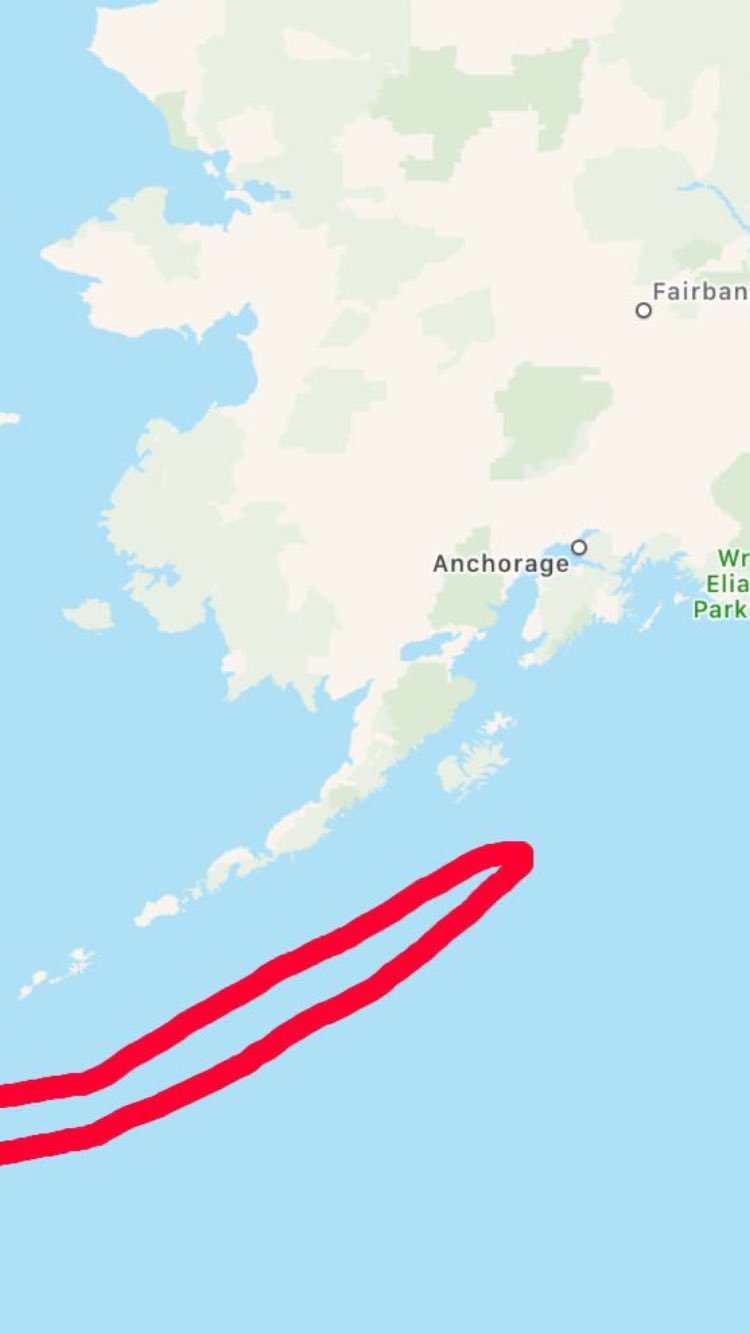 |
| https://twitter.com/MIL_Radar/status/854355594576351233/photo/1 |
The two Russian Tu-95 “Bear” bombers flew roughly 280 miles southwest of Elmendorf Air Force Base, within the Air Defense Identification Zone of the United States.
The U.S. Air Force scrambled two F-22 stealth fighter jets and an E-3 airborne early warning plane to intercept the Russian bombers.
The American jets flew alongside the Russian bombers for 12 minutes, before the Russian bombers reversed course and headed back to their base in eastern Russia.
Bear no one will not ask permission to ask
Подписаться на:
Комментарии (Atom)

-
Оригинал взят у в Фотографии моделей кораблей с Морского салона На Морском салоне было представлено достаточно много моделей различны...
-
Фото: выложено 18.09.2018 года "Лёшей Руденко" в группе в ВК "Адмирал Кузнецов" https://vk.com/kuznetcovadmiral


